Showing posts with label Art Gallery. Show all posts

About our Gallery - Jonathan Novak Contemporary Art

Since 1978, Jonathan Novak Contemporary Art has been an important source for Post-War and Contemporary American and European art. 

The current gallery location opened in 2000 and is located in the heart of Century City, adjacent to Beverly Hills and the west side of Los Angeles. 

Gallery inventory includes paintings, drawings, sculpture, and prints by established artists from significant Post-War movements including Abstract Expressionism, Color Field, Minimalism, Pop Art, and Photorealism. Jonathan Novak has been an exhibitor at international art fairs in New York, Chicago, Los Angeles, Miami, San Francisco, Palm Beach, Palm Springs, Southampton, and Aspen.  Heis a member of the Fine Art Dealers Association (FADA), The International Fine Print Dealers Association (IFPDA), and the Private Art Dealers Association (PADA). The gallery is open by appointment. View Artists and Artworks.

Pictured: Jim Dine and Niki de Saint Phalle

Pictured: Ben Schonzeit

Pictured: Sam Francis, Robert Motherwell, Jim Dine

Pictured: Julian Opie

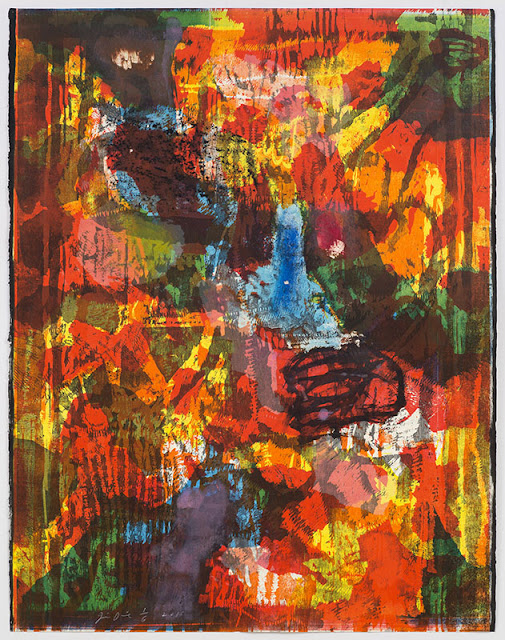
Pictured: Kikuo Saito


Art Palm Springs 2017

Official Press Release 

Jonathan Novak Contemporary Art will exhibit a significant body of work by internationally renowned Post-War and Contemporary artists at Art Palm Springs, February 16-19, 2017 at the Palm Springs Convention Center. Exhibition Page Link. Artists include Sam Francis, Jim Dine, Frank Stella, Helen Frankenthaler, Richard Diebenkorn, Roy Lichtenstein, Julian Opie, Paul Jenkins, Howard Hodgkin, Jean Dubuffet, John Baeder, Robert Cottingham, and Wayne Thiebaud.

As a representative of Jim Dine, Jonathan Novak Contemporary Art will exhibit the artist's most iconic images including hearts, robes, and Venus de Milo, as well as his most recent body of abstract work. Novak will also exhibit major works by Sam Francis and Helen Frankenthaler, coming from long-held private collections. Frank Stella's Pergusa Three, one of the most important works from the Circuit series, will be on view along with Richard Diebenkorn's prized Ocean Park series and exciting new hand-painted editions by Howard Hodgkin. Novak's selections include paintings, drawings, monotypes, sculpture, and editioned works from these and other influential artists from Abstract Expressionism, Pop, Photorealism, and Minimalism.

Jonathan Novak Contemporary Art, a long-standing gallery in Southern California, is an important source for Post-War and Contemporary American and European art. The gallery is located in the heart of Century City, adjacent to Beverly Hills and the west side of Los Angeles. The gallery's extensive inventory includes paintings, drawings, sculpture, and prints by acclaimed artists from significant Post-War movements including Abstract Expressionism, Color Field, Minimalism, Pop Art, and Photorealism.

Jonathan Novak has been an exhibitor at international art fairs in New York, Chicago, Los Angeles, Miami, San Francisco, Palm Beach, Palm Springs, Southampton, and Aspen. He is a member of the Fine Art Dealers Association (FADA), The International Fine Print Dealers of America (IFPDA), and the Private Art Dealers of America (PADA).

Frank Stella   Pergusa Three   1983   Relief, woodcut on white TGL handmade, hand-colored paper   66" x 52"   Edition of 30

Art Palm Springs Location
Jonathan Novak Contemporary Art
Booth 307 Palm Springs Convention Center 
277 N Avenida Caballeros 
Palm Springs, CA 
92262

About Jonathan Novak Contemporary Gallery: (http://novakart.com)

Art Miami 2016

Official Press Release

Jonathan Novak Contemporary Art is pleased to be exhibiting at Art Miami from November 29 - December 4. Exhibition Page Link. Novak will be featuring significant works by Sam Francis from the 1960s – 1980s, celebrating the artist's enduring legacy as one of the most renown American Abstract Expressionists. The centerpiece of the gallery's exhibition is an extraordinary Sam Francis painting on canvas, massive in scale at ten feet. This monumental work will be displayed at the Jonathan Novak Contemporary Art booth (#C213) at the Art Miami Wynwood Arts District. 

Novak will also be showcasing a diverse collection of works by important artists from the Post-War movements of Abstract Expressionism, Pop, Photorealism, and Minimalism including Sam Francis, Jim Dine, Frank Stella, Niki de Saint Phalle, Robert Cottingham, Roy Lichtenstein, Wayne Thiebaud, Paul Jenkins, Helen Frankenthaler, Howard Hodgkin, Jean Dubuffet, John Baeder, Lucas Samaras, Julian Opie, and others. The selection includes paintings, drawings, monotypes, sculpture, and editioned works from this group of revered and influential artists. 

 Jonathan Novak Contemporary Art a long-standing gallery in Southern California, is an important source for Post-War and Contemporary American and European art. The gallery is located in the heart of Century City, adjacent to Beverly Hills and the west side of Los Angeles. The gallery's extensive inventory includes paintings, drawings, sculpture, and prints by acclaimed artists from significant Post-War movements including Abstract Expressionism, Color Field, Minimalism, Pop Art, and Photorealism. 

 Jonathan Novak has been an exhibitor at international art fairs in New York, Chicago, Los Angeles, Miami, San Francisco, Palm Beach, Palm Springs, Southampton, and Aspen. He is a member of the Fine Art Dealers Association (FADA), The International Fine Print Dealers of America (IFPDA), and the Private Art Dealers of America (PADA).

Frank Stella   Talladega Three II   1982   Editioned work on paper


Niki de Saint Phalle   Fauteuil Serpent   1982   Editioned sculpture

About Jonathan Novak Contemporary Gallery: (http://novakart.com)


Art Miami Location:
Jonathan Novak Contemporary Art
Booth C213 
Wynwood Arts District
3101 NE 1st Avenue
Miami, FL
33137

Jim Dine: Abstraction

Jim Dine is known for his timeless iconography; hearts, robes, and Venus de Milo are just some of the themes strongly associated with the artist's vast oeuvre. 

At the age of 81, the artist is passionately revisiting one of the most influential movements in Post-War art: Abstract Expressionism. 

Within Jim Dine: Abstraction, a wide array of recent paintings and graphics demonstrates the artist’s journey into his new aesthetic. 

For much of Dine’s career, hints of abstraction could be found in the backgrounds of his works. In the last decade we have seen a greater focus on the strength and intensity of background abstract elements, causing the representational imagery to pop out on the surface. In Dine's newest work, we witness the background abstraction, so inherently captivating, moving to the foreground and taking center stage. Dine invites us into a complex, mysterious, and colorful journey of beauty in his exploration of abstraction. 

The canvases in this exhibition present Dine’s recent work with confidence and joy; they are filled with vivid color, texture, and dimension without reference to his prior imagery. 

Throughout Dine’s career, the artist has also been an avid printmaker enthusiastically approaching the art form out of his love for the process. In his new body of abstract graphics, Dine has proven fearless with his experimentation of composition as well as techniques used to create the finished work. The artist has inventively used unlikely methods: power-tools, coffee grounds, India ink, and thickly collaged elements in order to give each of his compositions the impact of a unique work, with each impression heavily worked by the artist’s hand. 

Dine’s most recent work is the birth of uninhibited expression and discovery. These creations make a powerful statement about the artist's continuous growth and spirit of adventure. Dine's large abstraction transports us into a new realm of color, surface texture, composition and form.

Pictured Above: Blood Moon – 96″ x 72″, 2015

Pictured Above: A Sign of its Pale Color, Tenderness – 84″ x 84″, 2015

Pictured Above: (Left) Love in the Wood – 67″ x 48″, 2015
(Right) Pepper (A Crime) – 48″ x 96″, 2014


Pictured Above: (Left) The Gravel Road – 52 3/4 x 37″, 2015
(Right) White Truck on the Right–Airport, Far Left – 63″ x 49 1/4″, 2015

Pictured Above: (Left) Creeley and Rebecca – 63″ x 49 1/4″, 2015
(Right) Left-Handed Woodcut – 37″ x 53″, 2015

View Jim Dine’s Artist Page

Visit www.novakart.com for more information


Chris Pfister: The Monochromes


Jonathan Novak Contemporary Art is pleased to present Yale-educated, Wyoming-based artist Chris Pfister’s The Monochromes. Pfister’s works present the interconnectedness of historic moments, past and present, through images set at the crossroads of memory, photography, and painting.

The latest body of work, a collection of oil paintings executed in selective palettes of grey, sepia, and black and white responds to the continual accumulation of discarded images, found objects, news footage, snapshots, and archaeological records.

Pfister brings importance to these often fleeting images and inserts them back into the present, though they echo the past. The narrative paintings question how we see and remember people, things, and landscapes.

Addressing the coexistence of photography and painting in a digitized world of instant images, these works enact the history of oil paint on canvas and recognize the time it takes to make and appreciate paintings.  

In a careful process, Pfister hand-makes all of his paints and mediums in studio from raw pigments, adding unique dimension to his works.

The Monochromes will be on view through November 20, 2015.

CHRIS PFISTER   Big Dry Landscape   Oil on canvas   2014   48" x 60" (121.9 x 152.4 cm) 
CHRIS PFISTER   Elder   Oil on canvas   2013   20" x 16" (50.8 x 40.6 cm)
CHRIS PFISTER   Giraffe   Oil on canvas   2014-15   60" x 48" (152.4 x 121.9 cm)
CHRIS PFISTER   Picnic   Oil on canvas   2013   14" x 18" (35.6 x 45.7 cm)


Click here to view the exhibition online.

Click here to view Chris Pfister's artist page and works available.


IMPORTANT WORKS ON PAPER

June 25 - August 28, 2015
Jonathan Novak Contemporary Art is pleased to present Important Works on Paper, featuring notable examples of Abstraction, Minimalism, Pop, and Photorealism.
The exhibition covers a vast array of expression upon one of the most essential, raw mediums: paper. This unforgiving surface honestly reveals the artist’s expertise in a unique way.
Important Works on Paper offers a variety of visual language including Wayne Thiebaud’s iconic and dramatic landscapes, Sam Francis’ vibrant explosions of color, Ralph Goings’ expertly painted reflections of light, and Jean Dubuffet’s rudimentary yet striking figuration.
The exhibition is comprised of paintings, drawings, monotypes, and editioned works. A wide range of mediums is featured including oil, acrylic, watercolor, gouache, glitter, charcoal, colored pencil, graphite, and collage.
On view are works by Wayne Thiebaud, Sam Francis, Jim Dine, Robert Motherwell, John Cage, Sam Messenger, Jean Dubuffet, David Hockney, Howard Hodgkin, Paul Jenkins, Ralph Goings, Robert Bechtle, John Salt, Charles Bell, Randy Dudley, Elizabeth Patterson, and John Baeder.
Important Works on Paper will be on exhibit through August 28, 2015.
On the homepage: Wayne Thiebaud – Drawing of San Francisco, David Hockney – Road to Palm Springs, Jean Dubuffet – Vache aux Deux Arbres, and Sam Francis – Untitled (SF63-006).
IMG_3590
Artists Include: Ralph Goings, Jean Dubuffet, David Hockney, Jim Dine, Sam Francis, Wayne Thiebaud, and Robert Bechtle
IMG_3591
David Hockney - Road to Palm Springs

IMG_3592
Jim Dine - Tricky Teeth


IMG_3608
From Left to Right:
Ralph Goings – Blueberry Pie
Jean Dubuffet – Vache aux deux Arbres
Ralph Goings – Napkin Box and Creamer
Wayne Thiebaud – Mountain Cloud
Sam Francis – Untitled (SF63-006)
IMG_3598
Charles Bell - Tinker Toys and Clown

Lichtenstein
Roy Lichtenstein - View from the Window 

IMG_3597
From Left to Right:
Howard Hodgkin - La Plume de ma Tante
Jim Dine - Hope
Sam Francis - Untitled (SFM78-171; SFM78-050)


IMG_3600
Jim Dine - Hope

IMG_3601
Howard Hodgkin - La Plume de ma Tante

IMG_3599
Sam Francis - Untitled (SFM78-171; SFM78-050)


IMG_3603
Robert Motherwell - Untitled (P77-3122)

IMG_3604
Sam Francis - Untitled (SFM81-144)

IMG_3606
John Cage - (R3) (Where R=Ryoanji); R3 (Where R=Ryoanji)

IMG_3607
Randy Dudley - Desert Tramline

IMG_3610
Sam Francis - Untitled (SF74-860; SF76-1105A)

IMG_3612
Elizabeth Patterson - Sepulveda Blvd., 5PM

IMG_3614
Sam Messenger - Veil from Ketos


IMG_3615
Robert Motherwell - Untitled (Phoenician Red) (M-76-2821)

John Baeder Installed
John Baeder - Shofar
John Baeder - Jim's Diner


Jim Dine: A Retrospective

Jim Dine: A Retrospective brings together important works from key periods in the artist’s career. Comprised not only of paintings and monumental sculpture, but also unique works on paper as well as dynamic prints, the exhibition charts Dine’s energetic exploration across a wide array of mediums. Beginning with his early works often associated with the Pop Art movement, and tracing his work to the present, these pieces exhibit Dine’s iconic visual vocabulary including hearts, robes, tools, plants, and Venus de Milo. Additionally, recent abstract works represent an exciting new expression of Dine’s creative capacities.

DINE’S EARLY CAREER

After moving from his hometown of Cincinnati, Ohio, in 1958, Dine quickly established himself in the post-war New York art scene, first with the Happenings movement at the encouragement of mentor Allan Kaprow, and later—tangentially—with the Pop Art movement. Although Dine draws upon images of popular culture similar to those consumed by Pop artists, his use of these objects does not serve the same impassive, ironic sensibility. Instead, Dine’s repetition of a concise visual lexicon with his signature expressionist style continues to nuance once-common forms with personal meaning.

PAINTINGS

The works included in this exhibition not only demonstrate Dine’s creativity across mediums but also within a given discipline. Dine’s paintings on canvas, panel, and paper often incorporate materials such as charcoal, sand, and collaged elements to depict his iconic forms.
After painting his first heart in 1966, the symbol became a central theme in Dine’s work. A self-described romantic artist, Dine sees the heart for its obvious connection to the strong emotions of love, but also values it as a geometric framework with which he can explore dynamic color relationships and textures. Gossip (1970-71) incorporates collage elements characteristic of some of Dine’s earliest works on paper along with cutout hearts and hand-applied coloring. The resulting work plays positive and negative space against one another to define the shape of the heart amongst evocative textual elements set within a matrix of numbers, which suggest but elude meaning. WhileGossip examines the spatial and linguistic capacities of the heart icon, Tricky Teeth (1970-71) uses the form to address color relationships. Here, a flat, black heart is fixed within a pulsating passage of vibrant colors. While the punched lettering of the title is representative of Dine’s penchant for typographic exploration in his early works, the field of color anticipates some of his most recent abstractions.
In addition to color and form, the heart also allows Dine to explore texture. Brought together in this exhibition, the scraped-smooth surface of Hearts in the Meadow (1970) offers a tactile contrast to Dine’s more recent pairing of hearts entitled And the Cherry Trees (2014). With this painterly work, Dine continues to reinvent the form. The artist’s assertive brushwork is heightened by a rich and grainy texture built up with the incorporation of charcoal and sand, endowing one of his most iconic images with fresh and exciting energy.
Pepper (A Crime) boasts Dine’s ability to explore new artistic territory while maintaining his authorial visual style. In this powerful work, Dine’s expressionist energy is freed from geometric form. Colors vibrate against one another in organic, cell-like shapes before blending into dense layers.

SCULPTURE

In the 1980s, Dine began incorporating the Venus de Milo in his work as a visual link to the great themes and traditions of western art history. To develop his own style, Dine first removed the head from a plaster-cast tourist replica, then worked and re-worked the forms of the body—often incorporating cubist-inspired breasts and altering the stance from a coy contrapposto to a confident, frontal stride.
The life size sculptures in this retrospective, Milano and Napoli, visually attest to Dine’s ability to endow the iconic figure with vastly different significance and emotion through slight variations of form and hand-applied enamel finishing. This contrast is echoed by the works’ titles, which evoke the cultural differences between Northern and Southern Italy.
With Five Colorful Dancers, One Bronze Heart, Dine playfully exaggerates Venus’ posture even further to create a rhythmic repetition of female forms centered on his iconic heart. The hand-applied patina and enamel lend this work an atmospheric quality that links the timeless notions of female beauty and love with Dine’s novel composition.

PRINTS

Like his work in bronze, Dine approaches printmaking as an opportunity to focus his creative energy on small editions of works that are often experimental in technique and finished by hand—rather than reproducing preexisting works in large numbers.
Acting as a masculine counterpart to Milano and Napoli, Dine’s 1995 prints included in this retrospective, Very Picante and Pale Self, contribute a pair of related yet diverse works to his ongoing investigation of the bathrobe as a visual theme. Dine’s first bathrobe image was adapted from a New York Times advertisement in 1964. His subsequent variations on the bathrobe in a variety of mediums have redefined the image as a metaphorical stand-in for the artist. For these two prints, Dine used both relief and intaglio printing to achieve a sandy, smoky texture combined with powerful fields of saturated color. Through the use of 14 individual plates, Dine creates distinct harmonies of color from the contemplative pastels of Pale Self to the buoyant hues in Very Picante.
In addition to hand-applied color, Dine often experiments with combinations of printmaking techniques and implements. With Aldo Behind Me represents Dine’s inexhaustible exploration of the medium. Here, the artist has revisited plates originally made in collaboration with legendary French printmaker Aldo Commelynck and re-worked them using a wide range of techniques including aquatint, etching, drypoint, and mechanical abrasion to depict hand tools and paintbrushes. The result is a visual elegy for Dine’s life-long friendship with the printmaker also known for his work with earlier Modern artists including Picasso and Matisse.
Dine’s restless experimentation with print techniques often blurs the lines between mediums. With It’s A Drawing, It’s A Print, what begins as a multi-color woodblock print is finished with hand-applied charcoal drawing. The Grand Carpet further conflates categories by combining woodcut relief printing and drypoint intaglio on copperplate with single-reproduction monoprinting. The resulting works, although belonging to a small edition, are each unique in their own right. Finally, with The Forest Up North, Dine pushes printmaking to rival the scale and ambition of his paintings by combining a hand-painted heart floating amongst a vast forest of printed trees.

RETROSPECTIVE, PROSPECTIVE

The pieces brought together by this retrospective demonstrate Dine’s continued ability to redefine his personal visual repertoire that has become so iconic, and—perhaps more importantly—to push beyond those forms in exciting new ways. The innovation and experimentation across mediums represented by the exhibition further expand traditional notions of Dine as painter, sculptor, and printmaker.
Jim Dine: A Retrospective will be on exhibit through March 12, 2015
All text and photography is © Jonathan Novak Contemporary Art.


PHOTOREALISM / THE EVERYDAY ILLUMINATED

MAY 12 – JULY 11, 2014

The Photorealist movement transforms the expressive and disciplined study of photographic imagery into highly detailed works of art. Since the 1970s, practitioners of the style have painted, drawn, and sculpted contemporary scenes with articulations of light playing across diverse surfaces: urban and suburban landscapes, the polished exteriors of automobiles or toys, appetizing scenes of food and drink, and the reflective windows and surfaces of seemingly familiar places. Photorealism developed in part as a reaction against the abstraction prevalent in modernist movements. Using their highly refined technical skills, often tricking the viewer (is this a photograph or is it a painting?), the Photorealists successfully tap into one’s emotions by recreating the atmosphere of a specific time and place. Memory is a key component of one’s experience with a Photorealistic work. The possibility of rekindling childhood images or nostalgia is likely, both consciously and subconsciously. 

To some critics, the Photorealists may appear to merely recreate these photographic images into technically obsessive paintings, when in fact the works are acute expressions of the human experience, capturing precious and elusive moments in time. The Photorealists have the ability to take the common, the banal, and often ignored daily routines and to recognize and memorialize these scenes for posterity. In this realm of artwork, the ordinary transforms into the extraordinary. 

Jonathan Novak Contemporary Art is pleased to present an extraordinary group of revered and influential American and European Photorealists: Linda Bacon, John Baeder,Luigi Benedicenti, Roberto Bernardi, Tom Blackwell, Robert Bechtle, Charles Bell, Pedro Caceres, Robert Cottingham, Randy Dudley, Richard Estes, Robert Gniewek, Ralph Goings, Gus Heinze, Don Jacot, Cheryl Kelley, Ronald Kleemann, Jack Mendenhall, Bertrand Meniel, Sharon Moody, Yigal Ozeri, David Parrish, Elizabeth Patterson, Rod Penner, David Pfannerstill, John Salt, and Ben Schonzeit.

Photorealism: The Everyday Illuminated will be on exhibit through July 11, 2014.

For more information, click here to see the gallery website.